Imagine you’re upstairs. Kids are finally asleep, the dog has been out for what was hopefully the last wee of the night, you poured yourself a nightcap and you’re tucked up in bed with a book, or more likely than not these days, settled in for a pre-sleep doom scroll. Pretty quiet around the house, not much doing. Occasional car going by, with music blaring and one of those annoying exhausts that sound like lunar new year in Chinatown.
And then you hear it.
Crack
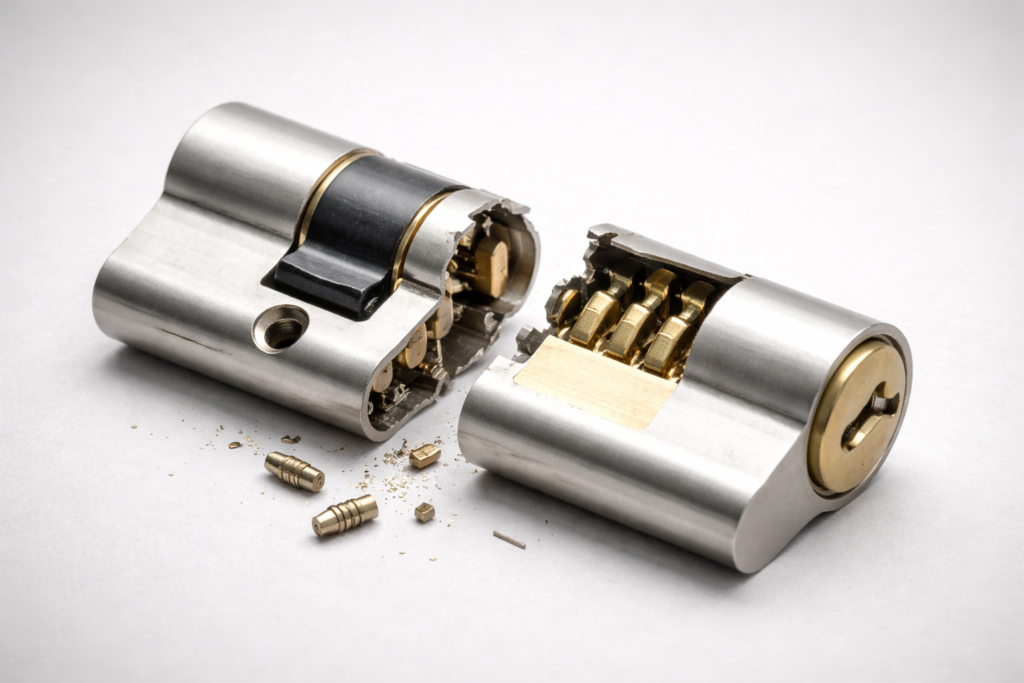
What was that? Sounded like it came from your neighbours garden. But they’re away on holiday, so he’s not going to be out mucking around in the garden like he usually does (he’s nice enough, but does some weird things). A cat? Fox? That car backfiring it’s way down someone elses’ street? Nope, it was the sound of a cylinder snapping and their lives being turned upside-down while they’re in Benidorm complaining about the cost of a pint in the UK (£7 for a Guinness last time I went out to my local).
Cylinder-snapping is on the rise in the UK, thanks to online videos, forums, social shorts and less responsible blogs than this. What’s more is that most homeowners feel invincible in the knowledge that they have a multipoint lock or a solid looking deadlock with thumbturn, which is linked to a common human trait know as Security Theatre.
The key flaw in the design
When I started training as a locksmith, I was made aware of a premise that has stuck with me; “If something is designed to work, it can be made to unwork”. I would say my English teachers would be crying about that particular phrase, but it gets the message across and I failed my English GCSE twice. Essentially, a lock is designed to lock, it is also designed to unlock – this is main weakness with the design. Even a decades old mulitpoint lock in an ancient back door will provide a degree of protectoin against physical attack, but when you get home from work, you need to put a key in the door and unlock it. This is where the cyclinder comes in, the little keyhole shaped lump of metal usually found below the handle, with an actual keyhole. This is what locks and unlocks your door, all the hooks, bolts and rollers along the edge of the door are told what to do by the cylinder. Key goes in, key turns, a small little arm the size of a fingernail in the centre of the cylinder known as the “Cam” spins round and there you have it. In most systems, it’s the bit that the human needs to control that ends up being the weak point, which is no different in this case. Not only that, but the cylinder itself has a pretty flimsy weak spot that makes cylinder snapping not only possible, but relatively easy. You can have the most expensive door, with the strongest multipoint lock, but if you throw in a £10 cylinder that doesn’t even fit right and was bought from an online auction site, well, sometimes you may as well not bother.
The anti-snap cyclinder revolution
Locksmiths are a smart bunch for the most part, they need to simultaniously behave like criminals and make you feel at ease, but their main job is to solve problems and try and stay one step ahead. When cylinder snapping started rippling its’ way through the industry, it was a closely guarded secret for obvious reasons, but then the internet exploded and anyone could upload a video and all of a sudden. So what happened was one of the lock manufacturers, alongside locksmiths came up with “anti snap cylinders” and they’ve evolved from there. They started as simply strengthening the well-known weak spot, then moved on to having a “sacrificial” side. This is the side the faces outwards and essentially allows itself to be snapped off in way that there is next to no way of getting that doors unlocked from the outside without the use of someone who really knows what they’re doing.
Make way for TS007
Being British, we love to be front runners in standardisation, regulation and legislation, so we have British Standards. Far from just being another layer of beurocracy, these standards are specifically there to keep us safe. If everything in this country had a Birtish Standard that was adhered to, you could almost guarantee potholes wouldn’t be even half as bad as they are right now. TS007 is the British Standard (Kitmark) for uPVC (BS3621 for other doors, check out my run down of that here), with cylinders enjoying 1-star or 3-star rating and handles getting a 2-star rating (just to make things simple). You can get a 3-star rating by either having a 3-star cylinder or you can have a 1-star cylinder and 2-star handles. But as well as the Kitemark, there is also Sold Secure, an independant testing house that loves to put security products through their paces, and they test cylinders up to TS007 (and beyond) and give their approved products a lovely diamond, with either 1 or 3 stars to denote the level of testing it has passed. I said that we love to be front runners, not that we made it straightforward.
How to check your locks
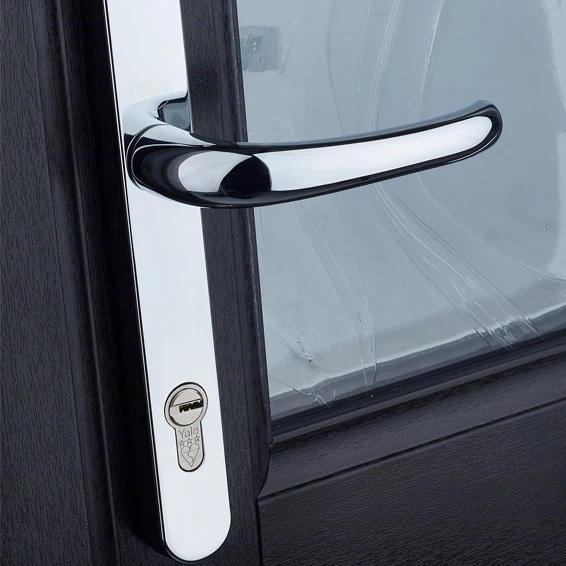
The great thing about British Standards and Sold Secure is that they like to make it easy for you to check whether something is up to the task, so they stamp the “Kitemark” or “Diamond” wherever they can. Again, the brilliant minds in the locking world realised that it’s probably a good idea to stamp this on the outside of the lock, so anyone thinking of having a crack at your door will see the markings and move on to your neighbour, who has never changed their locks because “I’ve been here for 15 years and never been broken in to before”. So how do you know whether you’re an easy target or a potential pain in the arse for whoever may want to get to your coat rack that little table in the hall where everyone keeps their car keys for some reason?
- Check the end of the lock for a Kitemark or Sold Secure Diamond with either a single or three stars
- Check that the cylinder sits flush with the handles (or as close to as possible)
- Check whether your handles have a Kitemark or Sold Secure Diamond
One thing to be aware of is that your insurer may state that your locks need to be up to a certain British Standard, if they’re not and that’s the way someone gets into your house, they may not pay out. It doesn’t matter how nice you are to them on the phone, how much you pay per month for your premium or how long you’ve been with them, If you have 1-star setup and you get broken into, they’ll walk away from you faster than you can say “why would I need a safe? I don’t have anything worth keeping in there”. If you are unsure or not confident enough to check this yourself, check the Master Locksmiths Association website for one of their approved locksmiths, be wary of using a random number that you found stuck to the side of an intercom panel – firstly, who the hell keeps puting them there? Secondly, who thinks “I need advice on my security, better call that random person that keeps vandalising my intercom with their mobile number”?
PerroBlanco